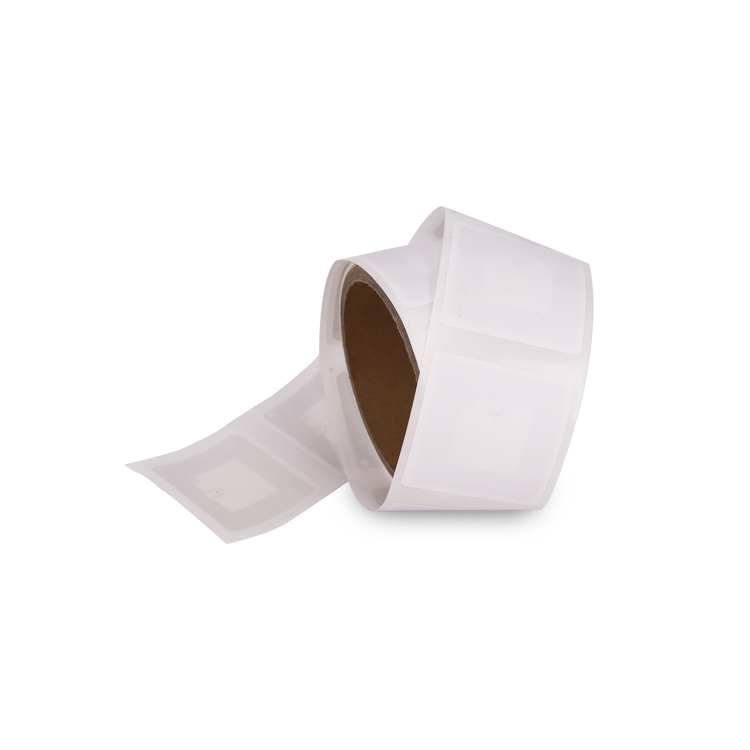
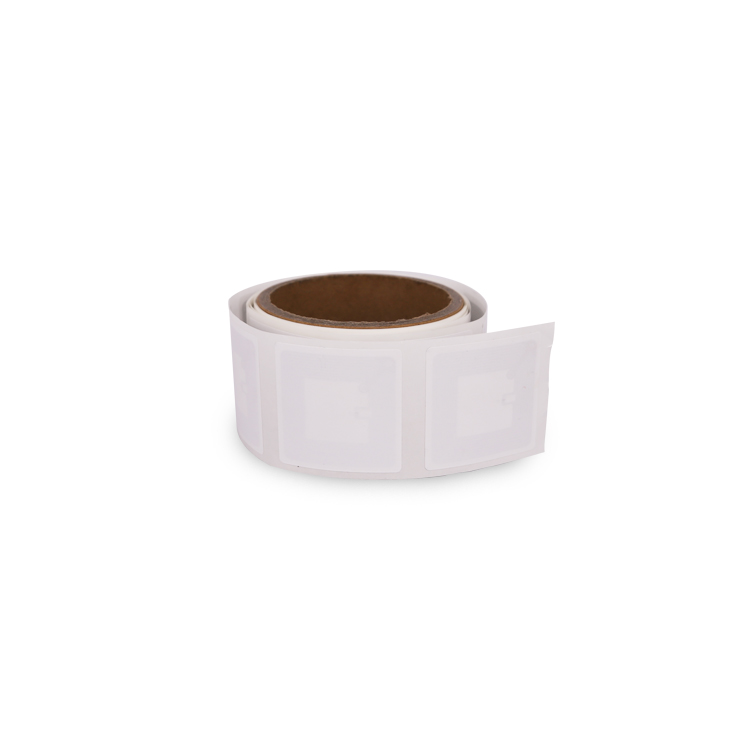
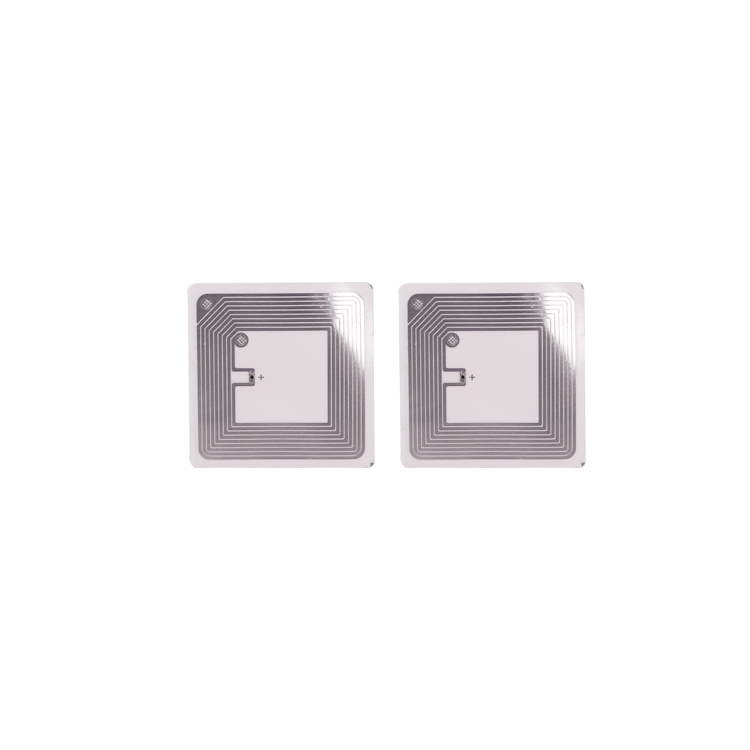
Chip Model: NXP ICODE SLI X
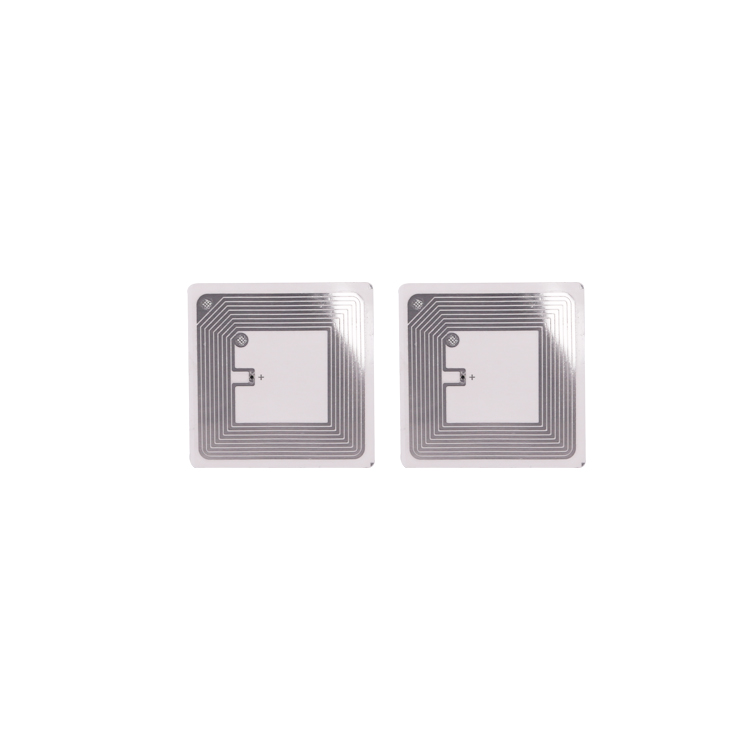
Product Dimensions: 50 x 50 mm
Surface Material: Coated Paper / PET
Communication Protocol: ISO 15693
Memory Capacity: 1024 bits
Operating Temperature: -20°C to 65°C
Data Retention: Over 10 years
Write/Erase Cycles: Over 100,000 times
Printing Process: Blank / Offset / Digital Printing
Packaging: 2,500 sheets per roll
Main Applications: Library management, asset management, etc.
RFID Library Tag Specifications
| Chip Model | NXP I CODE SLI X | ALIEN H3 | ||
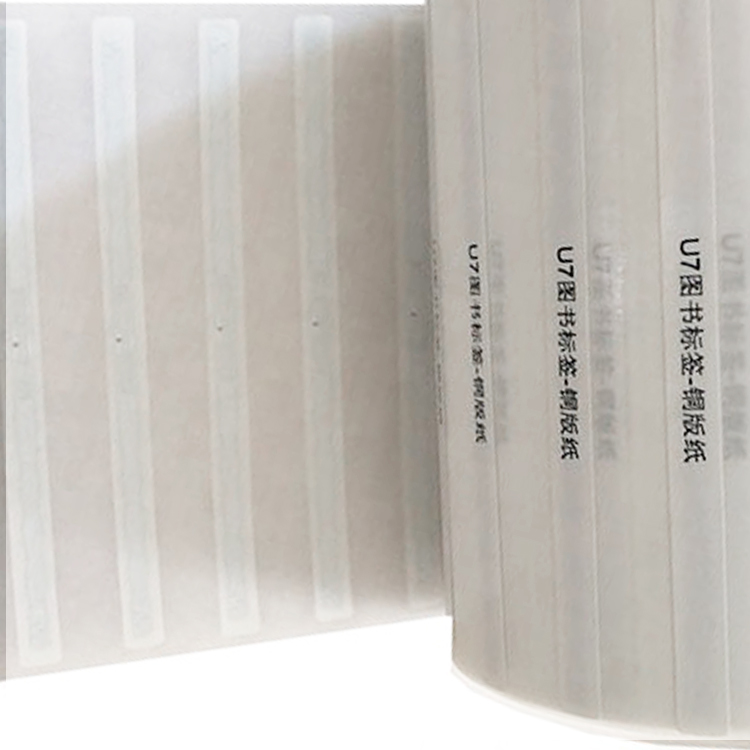
| Dimensions | 50 x 50 mm | 124 x 7 mm | ||
| Surface Material | Coated Paper/PET | Coated Paper/PET | ||
| Communication Protocol | ISO 15693 | ISO/IEC 18000-6C | ||
| Operating Frequency | High Frequency 13.56 MHz | Ultra-High Frequency 860–960 MHz | ||
| Memory Capacity | 1024 bits | EPC 96–480 bits, User 512 | ||
| Operating Temperature | -20°C to 65°C | -20°C to 65°C | ||
| Data Retention | Greater than 10 years | Greater than 10 years | ||
| Write Cycles | Greater than 100,000 times | Greater than 100,000 times | ||
| Printing Process | Blank/Offset Printing/Digital Printing | Blank/Offset Printing/Digital Printing | ||
| Packaging | 2,500 sheets/roll | 2,000 sheets/roll | ||
| Main Applications | Library management, asset management, etc. | Library management, asset management, etc. |
Description
RFID book tags, also known as library electronic tags, serve as the RFID tag recognition module within smart library systems. Through the book tags and corresponding reader/writer modules, information from the tags can be read, including book title, book number, book type, and borrowing status. This data can be used as the basis for system sorting, facilitating book management.
Features
Quality Assurance
We utilize German MOSA composite equipment, which significantly outperforms domestic systems in terms of vision systems, dispensing systems, pick-and-place systems, and hot-press curing systems. This ensures more stable operations during unloading, feeding, dispensing, flipping, picking, placing, hot-press curing, inspection, marking, and collection, resulting in superior label quality.
Reliable Bonding
We use German-imported anisotropic conductive adhesive (ACA), which ensures a single conductive direction perpendicular to the Z-axis. This adhesive significantly outperforms standard conductive adhesives in terms of conductive particle performance, bonding strength, and reliability, resulting in a more stable and reliable connection between the antenna and the chip.
High Sensitivity
The built-in inlay antenna utilizes pre-exposure, development, and etching technology. The width of the aluminum etched lines can be controlled within ±0.03 mm, with the finest lines reaching 0.075 mm. The antenna lines are smooth, with minimal tolerances in line spacing and width, resulting in a more precise resonance frequency and faster, more stable read/write performance.
Free Design & Self-Printing
Artwork can be printed on coated paper with a custom logo as required. We offer free layout design for 2D codes, and you can customize label dimensions, chip models, memory codes, barcode numbers, and more.
Peel-and-stick, Strong Adhesion, Flexible Application
Features strong adhesion and moderate abrasion resistance, with a wide range of applications and time-saving benefits. Labels can be applied directly to object surfaces or, depending on the application environment, repositioned inside the sealed label housing.