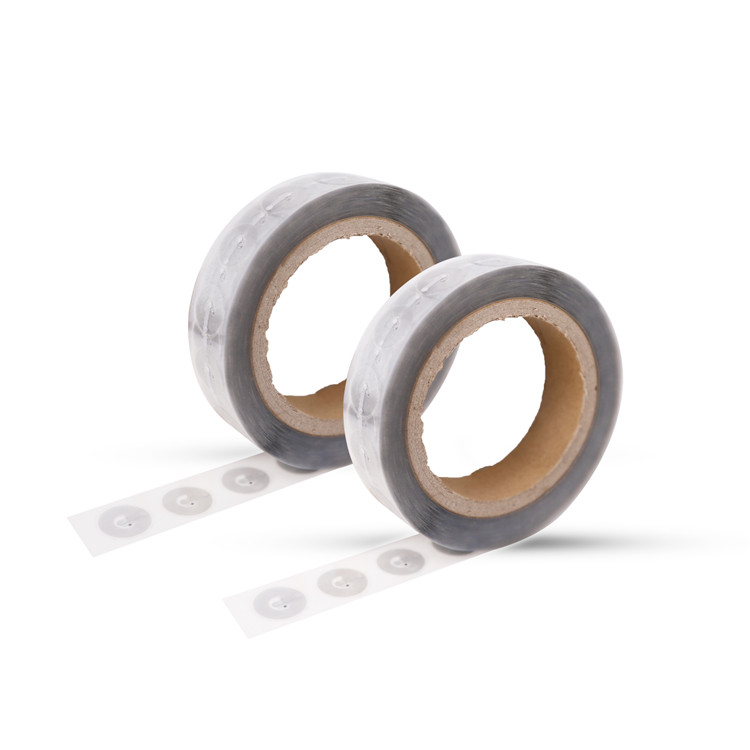
Frequency: 13.56 MHz
Protocol: ISO 15693
Read/Write Range: 0–100 mm (when used with a reader of appropriate power)/Customizable
Encapsulation Material: Etched aluminum + PET substrate/Customizable coated paper, etc.
Encapsulation Process: Flip-chip bonding + lamination
Applications: Anti-counterfeiting and traceability/Data transmission
Description
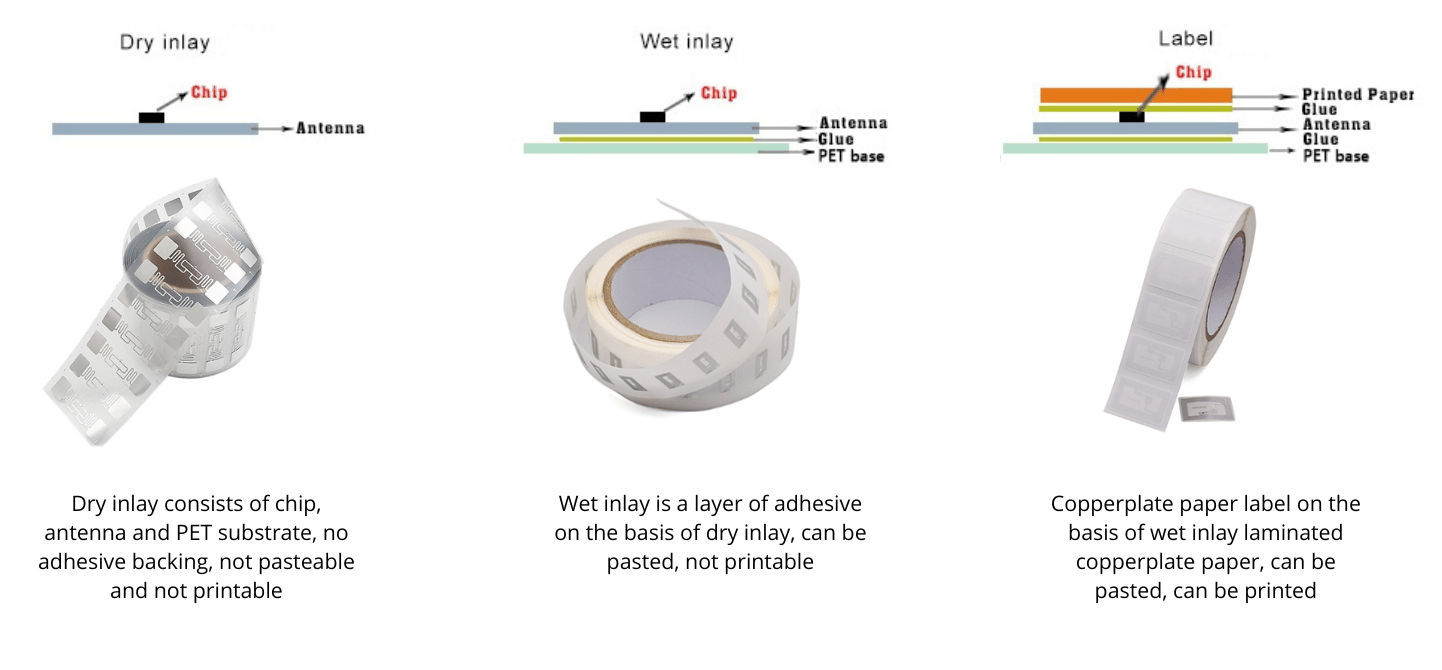
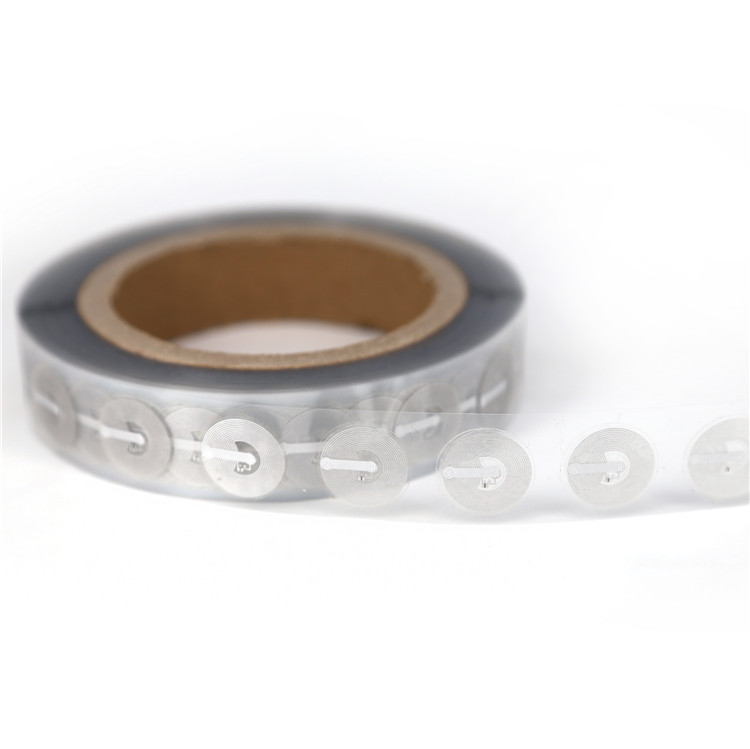
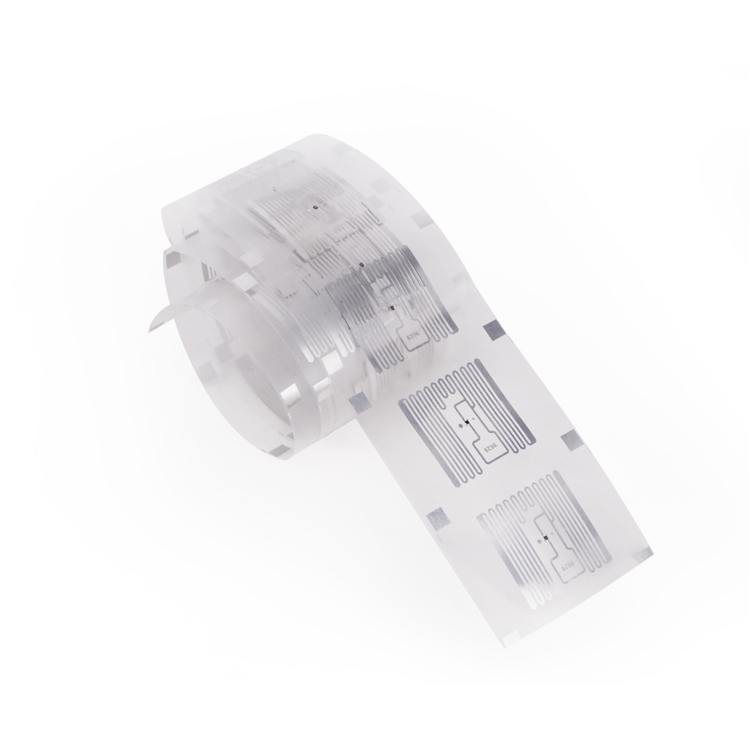
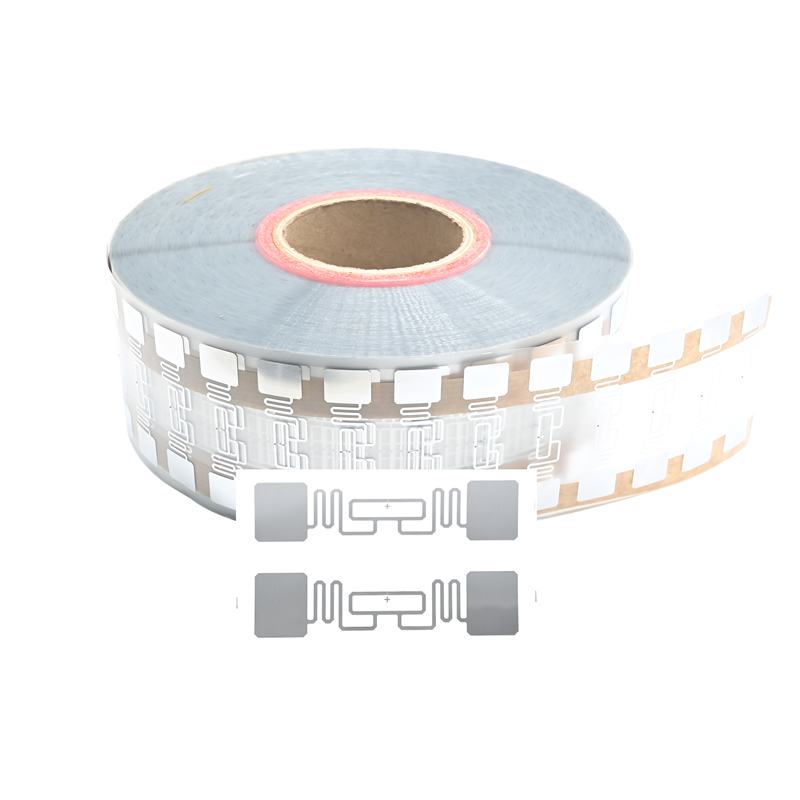
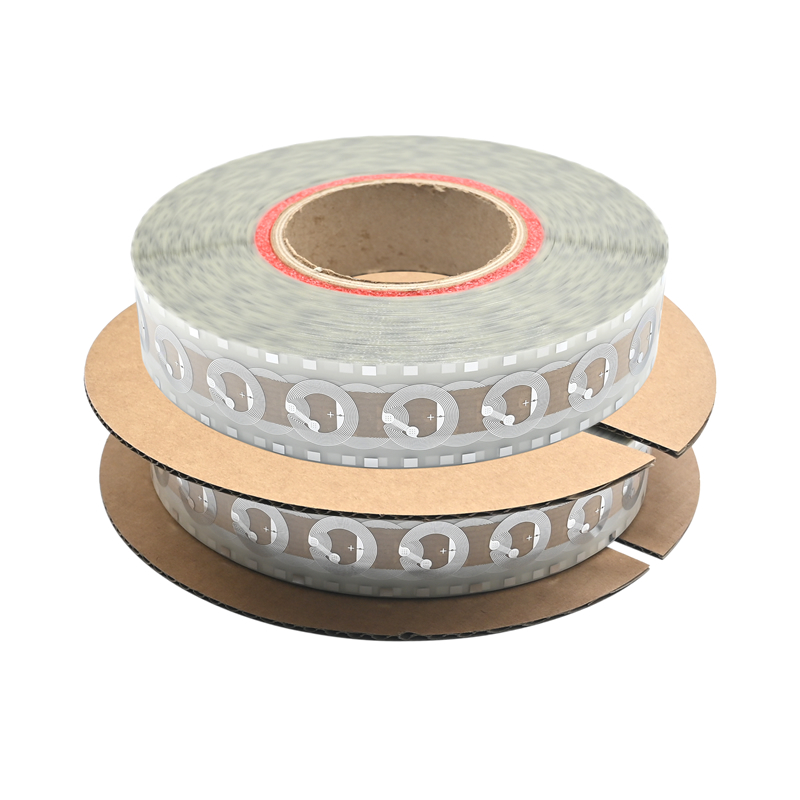
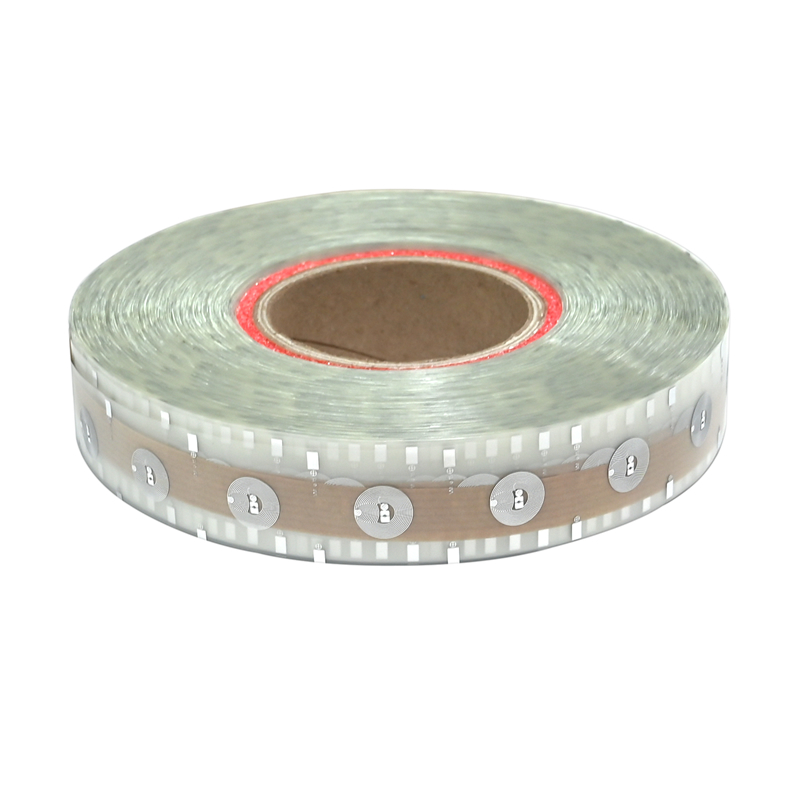
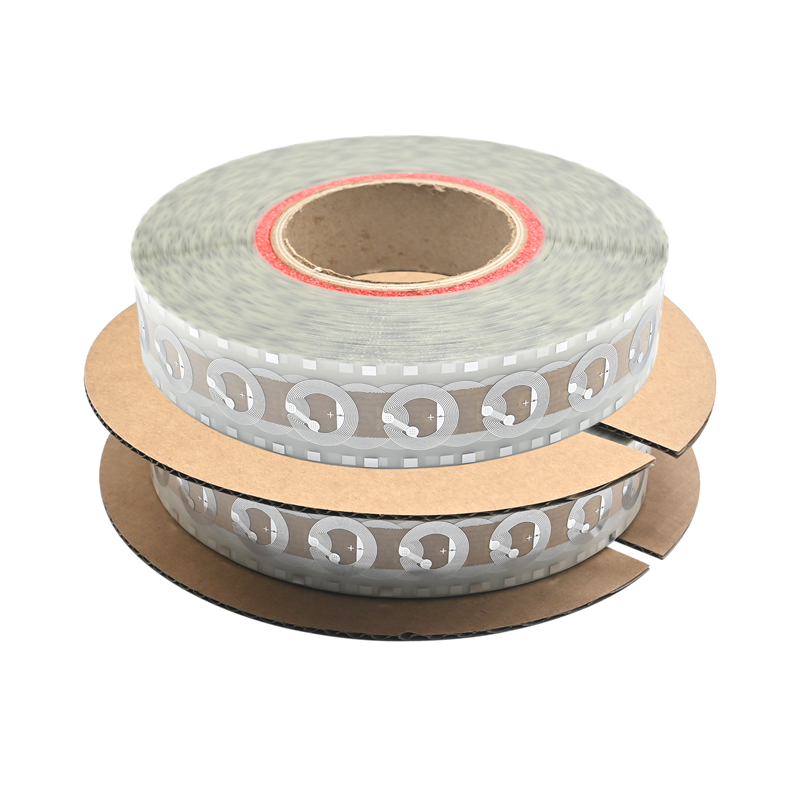
Inlay is a technical term in the RFID industry referring to a pre-laminated product consisting of multiple layers of PVC or other materials, including a chip and a coil. Through various encapsulation methods, this Inlay can be transformed into different types of RFID tags. An Inlay can be understood as a semi-finished product prior to the final encapsulation of an RFID tag. Dry Inlays do not contain an adhesive backing; their structure consists of an antenna, a chip, and chip packaging. Wet Inlays include an adhesive backing and can be directly applied to items.
Features
The hot-press encapsulation method involves laminating PET around the antenna to ensure the chip area is not compressed, preventing chip damage and resulting in a higher yield rate and more stable performance during long-term use.
We use ACA (Anisotropic Conductive Adhesive) imported from Germany, which ensures a single conductive direction perpendicular to the Z-axis. This adhesive significantly outperforms standard conductive adhesives in terms of conductive particle performance, bonding strength, and reliability, resulting in a more stable and reliable connection between the antenna and the chip.
The embedded Inlay antenna utilizes exposure, development, and etching technology. The etched aluminum line width can be controlled within ±0.03 mm, with the finest lines reaching 0.075 mm. The antenna lines are smooth, with minimal line spacing and width tolerances, resulting in a more precise resonance frequency and faster, more stable read/write performance.
The modified PET substrate is resistant to oil, dilute acids, dilute alkalis, and most solvents. It offers excellent mechanical properties and is lightweight, flexible, and comfortable. This modified PET substrate can operate in relatively harsh environments, ensuring a longer service life.
Application
1. Logistics. Cargo tracking, automatic data collection, warehousing applications, port operations, express delivery, etc.
2. Retail. Real-time sales data tracking, inventory replenishment, anti-theft measures, unmanned supermarkets, etc.
3. Manufacturing. Real-time production data monitoring, quality tracking, automated production, etc.
4. Medical device management, patient identification, infant anti-theft measures, etc.
5. Electronic passports, ID cards, student IDs, and other electronic credentials; access control systems, etc.